What Is All-on-4 Dental Treatment?
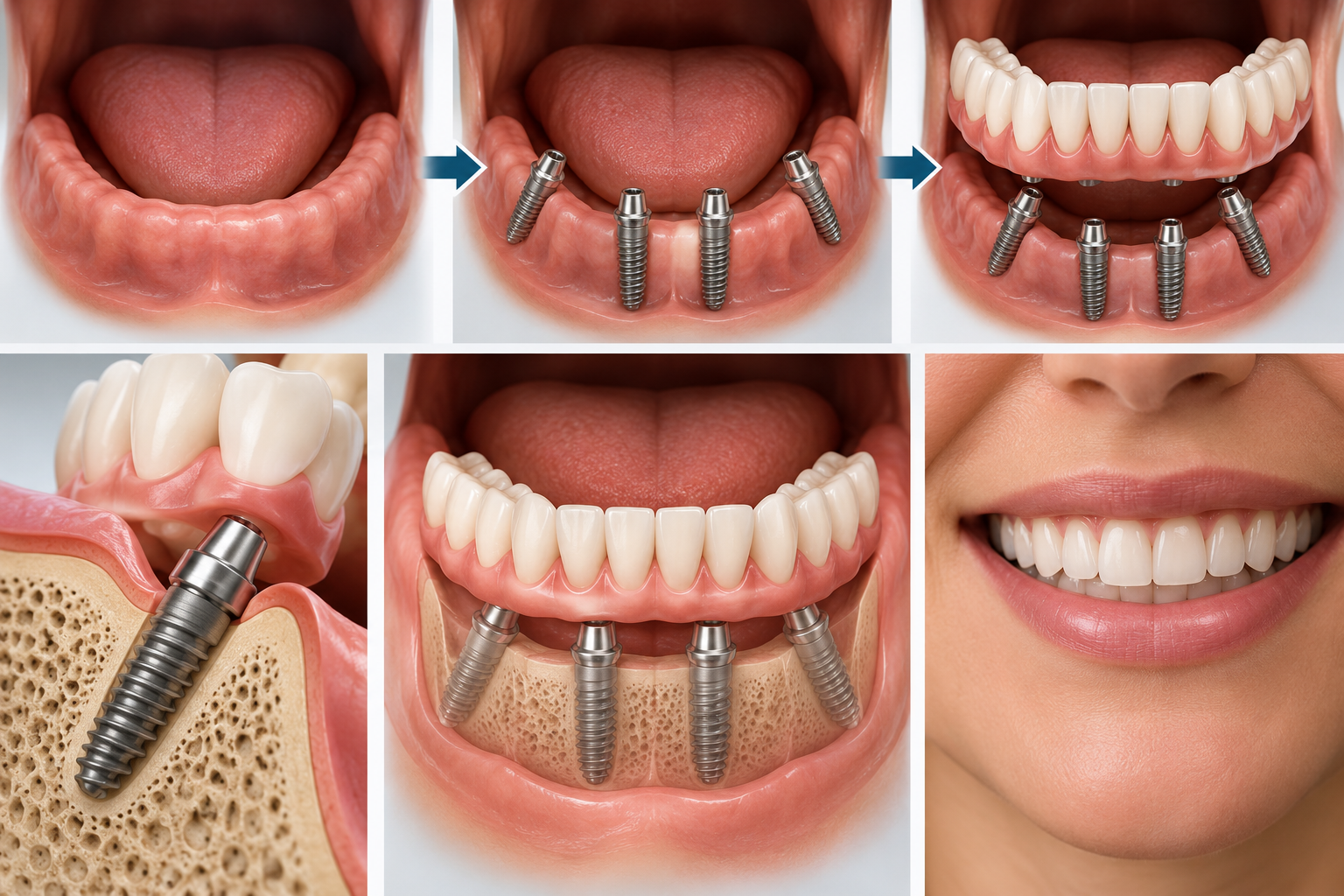
All-on-4 is one of the implant-supported fixed dental treatments designed especially for people who have lost all or most of the teeth in their upper or lower jaw. While traditional implant treatments may require a separate implant for each missing tooth, the All-on-4 method uses four strategically placed implants to support a fixed dental prosthesis.
This method can allow patients to replace multiple missing or severely damaged teeth with a treatment plan that may be more streamlined than placing individual implants for every missing tooth.
How Is All-on-4 Treatment Performed?
During the first stage, your dentist evaluates your oral and jaw structure in detail. Panoramic X-rays and, when necessary, 3D imaging are used to assess the condition of the jawbone, determine the areas where implants will be placed, and plan the prosthesis.
For suitable patients, four implants are placed in the jawbone. The position and angle of the implants are planned to make effective use of the patient's existing bone structure.
Depending on the dentist's assessment, temporary fixed teeth may sometimes be placed on the same day as the implants. After the healing period, the permanent prosthesis is prepared and the final stage of treatment is completed.
What Are the Advantages of All-on-4 Treatment?
All-on-4 treatment may offer several advantages for suitable patients:
It can provide support for a fixed prosthesis using four implants in one jaw.
It can allow multiple missing teeth to be replaced as part of a single treatment plan.
It can provide an alternative to removable dentures.
It may help improve chewing and speaking functions.
It can contribute to achieving a natural-looking smile.
In some patients, it can make more effective use of the existing bone structure.
However, All-on-4 is not suitable for every patient. The treatment method should be determined by a dentist after evaluating factors such as bone structure, oral and dental health, general health, and the patient's expectations.
Who Is All-on-4 Suitable For?
All-on-4 treatment may be considered for people who have lost all or most of the teeth in one jaw. It may also be an alternative for patients whose existing teeth are severely damaged and cannot be preserved in the long term.
Factors such as sufficient bone structure and appropriate oral health are evaluated to determine whether a patient is suitable for implant treatment. Certain uncontrolled systemic conditions, active gum disease, or insufficient bone structure may affect the treatment plan.
What Is the Difference Between All-on-4 and Conventional Implant Treatment?
In conventional implant treatment, the number of implants may vary depending on the number of missing teeth. In All-on-4 treatment, four implants are used to support a fixed prosthesis in one jaw.
Therefore, it would not be accurate to say that one method is universally “better” than the other. The appropriate method is determined after evaluating the patient's oral structure, bone condition, number of missing teeth, and treatment expectations.
How Long Does All-on-4 Treatment Take?
The treatment duration varies from person to person. After the initial examination and imaging, a personalized treatment plan is prepared. In suitable patients, implant placement and temporary prosthesis application can sometimes be completed within a short period. The permanent prosthesis is prepared according to the healing process of the implants and the patient's oral condition.
For this reason, rather than giving an exact treatment duration, a personalized schedule should be established by the dentist based on the examination and imaging results.
What Should Be Considered After All-on-4 Treatment?
Maintaining good oral hygiene is very important after treatment. The teeth and areas around the implants should be cleaned according to the dentist's recommendations, regular check-ups should be attended, and all aftercare instructions should be followed.
Regular dental check-ups and proper oral care are important for maintaining the health and longevity of the implants.
Conclusion
All-on-4 dental treatment is a modern implant-supported treatment option designed to provide fixed teeth for patients who have experienced significant tooth loss. However, whether the treatment is suitable and which method should be used must be determined by a dentist after evaluating each patient's individual oral and jaw structure.
Related Articles
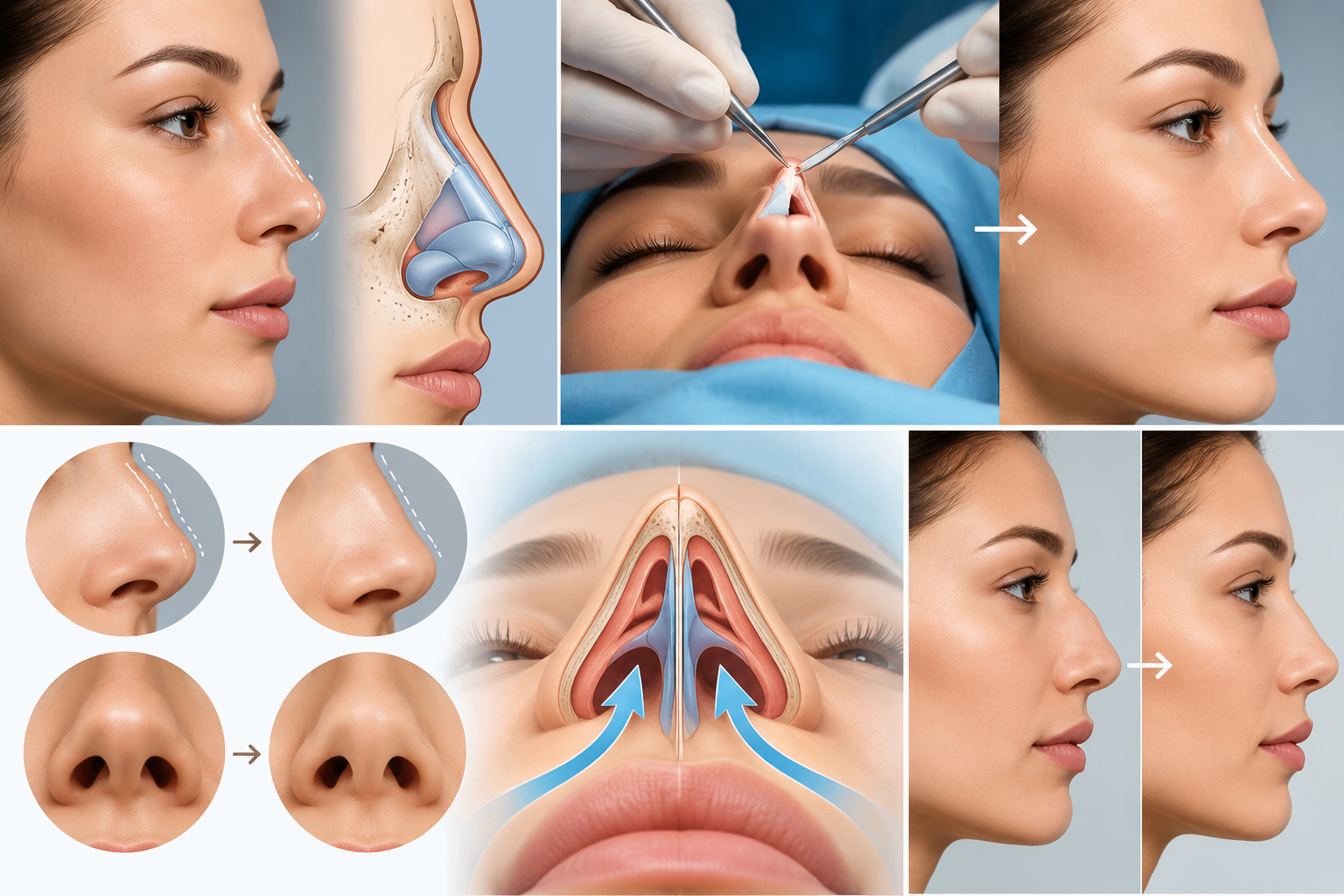
What Is Rhinoplasty? What You Need to Know About Nose Aesthetics
Rhinoplasty is a surgical procedure performed to change the shape, size, and proportion of the nose in harmony with the face. In addition to improving appearance, it may also help address certain breathing problems.

How to Choose a Hospital for Cosmetic Surgery in Turkey?
For patients planning cosmetic surgery in Turkey, choosing a hospital requires evaluating several factors together, including the surgeon’s experience, the hospital’s technical infrastructure, healthcare tourism capabilities, and postoperative care.