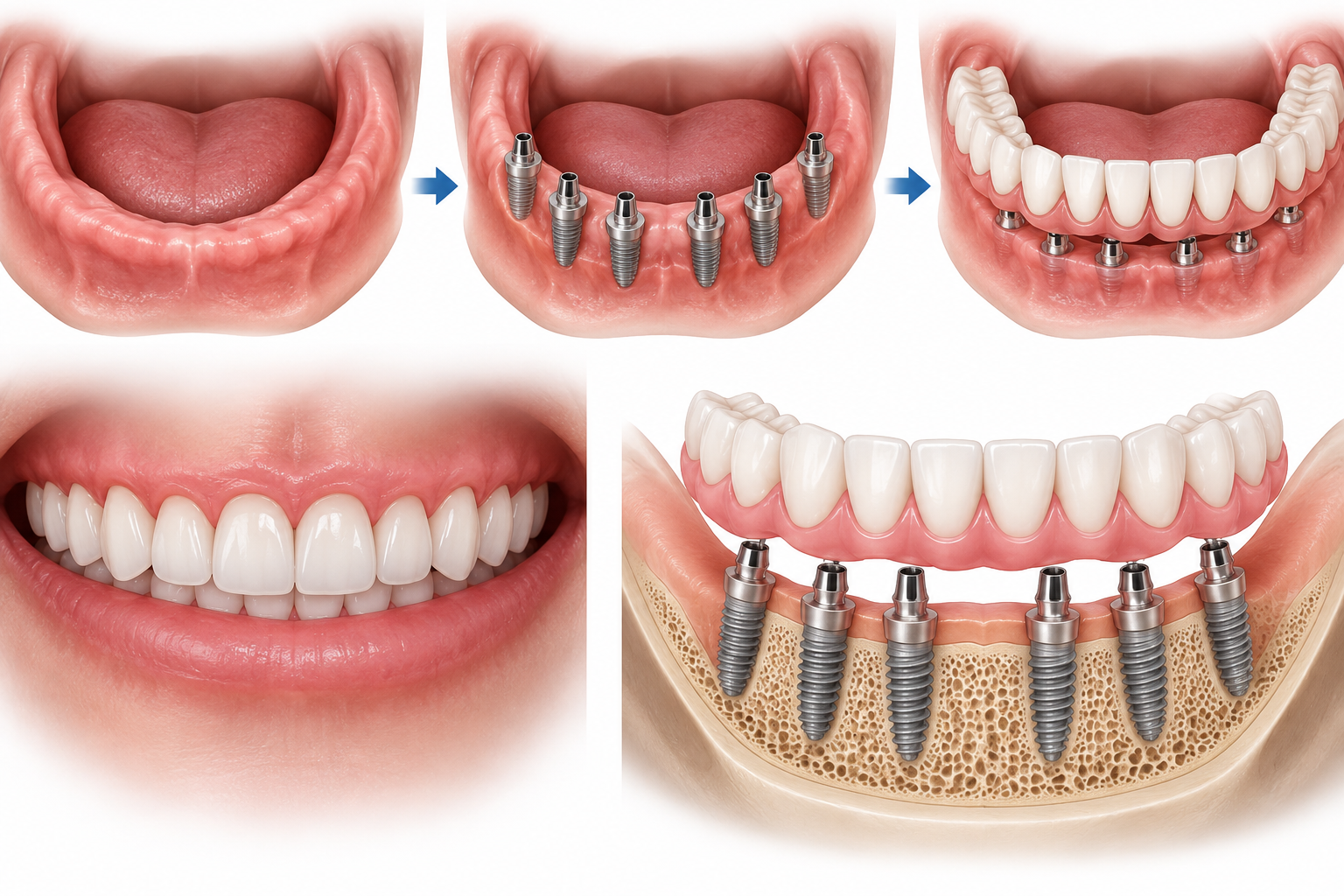
All-on-6 dental treatment is a fixed implant-supported dental treatment designed for people who have lost many of their teeth or whose existing teeth cannot be preserved. While traditional implant treatment may require a separate implant for each missing tooth, the All-on-6 system uses six strategically positioned dental implants to support a fixed dental prosthesis for an entire arch.
How Is All-on-6 Treatment Performed?
Before treatment, the dentist performs a detailed examination of the patient's mouth and jaw. Panoramic X-rays or three-dimensional imaging techniques are used to evaluate the condition of the jawbone and determine the appropriate implant positions.
For suitable patients, six dental implants are placed into the jawbone. The time required for the implants to integrate with the bone varies depending on the patient's bone structure, oral health, and treatment protocol. In some cases, temporary fixed teeth may be placed on the same day or shortly after implant placement.
After the healing period, a permanent fixed prosthesis designed according to the patient's oral structure and aesthetic expectations is attached to the implants.
Who May Be Suitable for All-on-6?
All-on-6 treatment may be considered for:
- People who have lost all or most of the teeth in one jaw,
- Patients whose teeth are severely damaged and cannot be saved,
- People who do not want to use removable dentures,
- Patients who prefer the stability and appearance of fixed teeth.
However, not every patient is suitable for All-on-6 treatment. Jawbone condition, gum health, oral hygiene, existing medical conditions, and general health are taken into consideration. Suitability is determined after a clinical examination and the necessary imaging.
What Are the Advantages of All-on-6 Treatment?
One of the important features of the All-on-6 system is that a large number of missing teeth can be replaced with a fixed prosthesis supported by six implants.
Patients may achieve a more stable dental structure after treatment. With proper planning and maintenance, results that closely resemble the appearance of natural teeth may also be achieved.
Depending on the individual, potential advantages include:
- The possibility of using a fixed dental prosthesis,
- Replacing multiple missing teeth within a single treatment plan,
- Restoring chewing function,
- Improving smile aesthetics,
- Providing an alternative to removable dentures.
What Is the Difference Between All-on-6 and All-on-4?
The main difference between All-on-4 and All-on-6 is the number of implants used. All-on-4 uses four implants, while All-on-6 uses six implants.
The appropriate system is determined according to factors such as the patient's jawbone condition, anatomical structure, existing teeth, and prosthetic treatment plan. Therefore, the number of implants alone does not determine which treatment is suitable for every patient.
How Long Does All-on-6 Treatment Take?
The duration of treatment varies depending on the patient's oral and jaw structure. In some cases, temporary fixed teeth can be prepared shortly after implant placement. The permanent prosthesis is usually placed after the necessary healing period and follow-up examinations have been completed.
If bone grafting or other additional procedures are required, the treatment period may be longer.
What Should Be Considered After Treatment?
Good oral hygiene and regular dental check-ups play an important role in the long-term success of All-on-6 treatment. The area around the implants and prosthesis should be cleaned regularly. Special brushes, interdental cleaning products, or other oral care products may be recommended by the dentist.
Regular check-ups also allow the condition of the implants, gums, and prosthesis to be monitored.
Conclusion
All-on-6 dental treatment is a modern implant treatment designed to provide a fixed dental prosthesis supported by six implants for patients with extensive tooth loss. However, the number of implants, type of prosthesis, and treatment duration may vary from patient to patient.
Before deciding on treatment, it is important to undergo an examination by a qualified dentist and the necessary imaging evaluations. This allows an individualized treatment plan to be developed according to the patient's oral structure and needs.
Related Articles
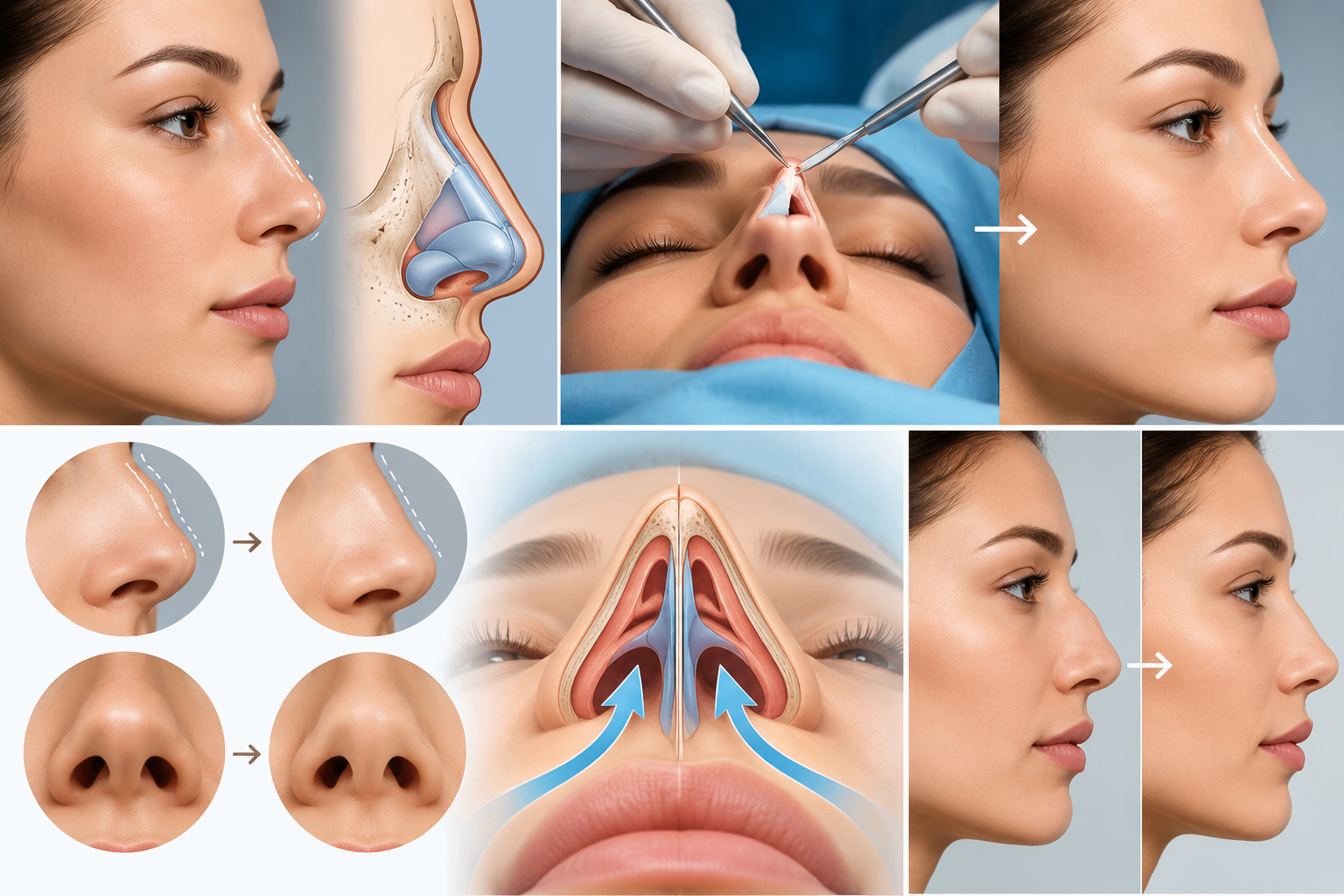
What Is Rhinoplasty? What You Need to Know About Nose Aesthetics
Rhinoplasty is a surgical procedure performed to change the shape, size, and proportion of the nose in harmony with the face. In addition to improving appearance, it may also help address certain breathing problems.

How to Choose a Hospital for Cosmetic Surgery in Turkey?
For patients planning cosmetic surgery in Turkey, choosing a hospital requires evaluating several factors together, including the surgeon’s experience, the hospital’s technical infrastructure, healthcare tourism capabilities, and postoperative care.